
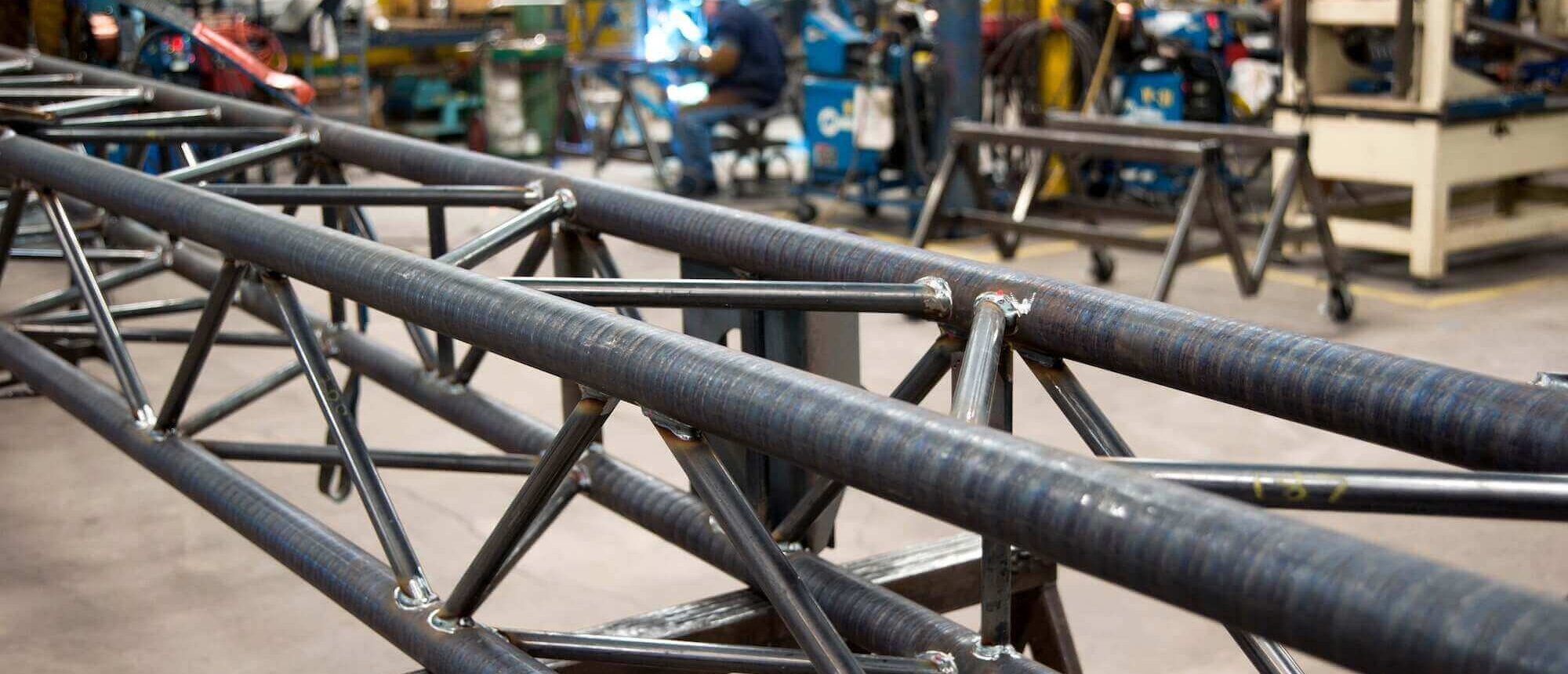
Supplier vs. Manufacturing Partner
Supplier Relationships • Contract Manufacturing
Supplier vs. Manufacturing Partner: Which One Do You Have?
What separates a manufacturing supplier from a manufacturing partner? A manufacturing supplier can meet a print, ship a part and fulfill a purchase order. A manufacturing partner does something more. They understand how their work affects your production, connect their technical teams with yours, communicate when something changes and help manage the challenges that don’t always appear on a drawing.
That distinction becomes more important as a program becomes more complex. Multiple processes, tooling, outside suppliers, quality requirements and production schedules all create more points where communication and coordination matter.
So, which one do you have? Use this guide to look beyond the purchase order and evaluate whether your supplier relationship is primarily transactional—or developing into a true manufacturing partnership.
Step 1: Look Beyond the Buyer-Salesperson Relationship
Most manufacturing relationships begin with purchasing and sales. Purchasing identifies a need, sales works through the requirements, quotes are exchanged and eventually a purchase order is issued.
Strong relationships don’t stay there.
Once production begins, people throughout both organizations may need to understand the program. Engineering should be able to reach engineering. Quality should be able to reach quality. Production and scheduling should understand what the customer needs and why it matters.
When the relationship extends across departments, information moves faster and fewer things depend on one person knowing the whole story. That’s one of the clearest differences between a traditional supplier relationship and a manufacturing partnership.
Questions to Ask About Your Supplier Relationship
- Who does your engineer call when there’s a manufacturing question?
- Can your quality team communicate directly with the supplier’s quality team?
- Does production understand why your delivery dates matter?
- If your primary contact were unavailable, would anyone else understand your program?
- How many departments at the supplier could have an informed conversation about your product?
Quick check: If only the salesperson understands your business, you may have a capable supplier—but the relationship is probably still transactional.
Step 2: Evaluate What Happens When Something Goes Wrong
It’s easy to be a good supplier when everything goes according to plan.
The better test is what happens when it doesn’t.
Material is late. A tolerance becomes difficult to hold. Demand changes. A quality issue appears. A tool needs repair. A delivery date is suddenly at risk.
None of those situations automatically make someone a bad supplier. Manufacturing has too many variables for every program to run perfectly all the time.
What matters is what happens next. Does the supplier communicate early, or do you find out when the order is already late? Do they simply report the problem, or bring the right people together to work through it? And once the issue is resolved, does the organization retain what it learned?
How Does Your Supplier Respond?
- Do they communicate the problem early?
- Do they wait for you to discover it?
- Do they simply report the problem—or help develop a solution?
- Can the right people from both organizations get involved quickly?
- Do you understand what corrective action is being taken?
- Does the supplier learn from the issue or does the same problem keep happening?
The real test: Problems happen in manufacturing. How they’re handled often tells you more about the relationship than what happens when everything is running smoothly.
Step 3: Supplier vs. Manufacturing Partner: Look Beyond Piece Price
Every manufacturer needs competitive pricing. But piece price is only one part of the cost—and value—of outsourcing production.
Think about the time your team spends chasing delivery dates, resolving recurring quality issues, coordinating outside suppliers or repeating information because it hasn’t been communicated internally.
Those activities have a cost even when they never appear on a quote.
The difference becomes especially important with complex programs. The more responsibility a supplier can successfully take on, the less time your team should have to spend managing the details behind them.
That doesn’t mean price stops mattering. It means the value of the relationship goes beyond the number on the quote.
Supplier vs. Manufacturing Partner
| Supplier | Manufacturing Partner |
|---|---|
| Makes the part | Understands the program |
| Responds when asked | Communicates proactively |
| Focuses on its operation | Understands downstream impact |
| Works from the print | Asks what matters beyond the print |
| Reports problems | Helps solve problems |
| Relationship sits with sales | Relationship crosses departments |
Step 4: Determine Whether Manufacturing Knowledge Is Being Shared
A drawing contains dimensions, tolerances, materials and specifications. But does it contain everything someone needs to know after a product has been manufactured for years?
Usually not.
Established products often have manufacturing knowledge behind them that was learned through experience. A certain weld sequence may minimize distortion. A cosmetic area may require special handling. A fixture may need to be set up a particular way. An inspection method may exist because of a problem that happened years ago.
That knowledge can live with engineers, quality teams, operators and suppliers without ever being formally captured on the drawing. When production moves, that knowledge needs to move with it.
What Might Not Be on the Print?
- Difficult features or tolerances
- Fixture setup
- Welding sequence
- Cosmetic expectations
- Inspection methods
- Packaging requirements
- Past failures and lessons learned
- Processes that have already been tried
- Characteristics that are especially important downstream
Ask yourself: If you transferred this program tomorrow, how much knowledge would have to move with it?
Step 5: See What a True Production Transfer Requires
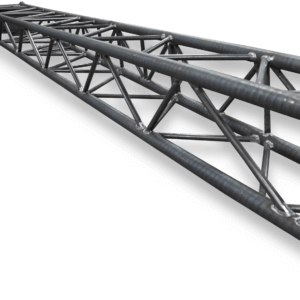
A program for a leading industrial crane manufacturer provides a good example of what this can look like in practice.
The customer needed additional capacity for a complex 30-foot crane jib assembly made up of 239 individual parts and more than 300 manual welds. The program had previously been manufactured inside the customer’s facility, so moving production to Leonhardt required more than transferring drawings, tooling and a purchase order.
It required people from both companies to work together.
See How the Production Transfer Worked
Engineers and welders worked side by side on the customer’s shop floor and ours to transfer the manufacturing process and the practical knowledge behind it. At the same time, tooling, suppliers and quality requirements had to transition while production continued.
Supply Chain
Leonhardt continued working with the customer’s existing suppliers for components and raw materials and organized them into a JIT Kanban system. Instead of continuing to manage the multiple suppliers and part numbers behind the assembly, the customer could purchase one completed jib from Leonhardt.
Tooling & Production
Tooling transfers had to be coordinated around existing production requirements so the transition itself didn’t create unnecessary disruption. Leonhardt also expanded manufacturing space, extended an overhead crane-way and established a dedicated work cell designed to support the size and complexity of the assembly.
Quality
With more than 300 manual welds in each assembly, quality was critical. Welders were third-party certified to AWS standards, and the teams worked together to understand key tolerances, product characteristics and inspection expectations.
Production Knowledge
Just as important as the drawings and tooling was the knowledge of the people who had already built the assemblies. Working side by side helped transfer practical experience around setup, sequencing, handling and other details that weren’t always captured on the print.
The Result
The customer gained additional manufacturing capacity while reducing the internal resources needed to manage multiple suppliers, part numbers and inventory. Leonhardt took responsibility for coordinating the pieces behind the finished assembly—not simply welding the product.
Want to see the full project?
Read the complete crane jib assembly job story.
That’s the difference between simply moving a job to another supplier and transferring responsibility to a manufacturing partner.
Step 6: Do You Have a Manufacturing Partner?
By this point, you probably have a sense of where your supplier relationship stands. You don’t need another formal scorecard to determine whether the relationship is moving beyond the transactional stage.
Instead, think about how the relationship actually works today.
If most of those answers are yes, you probably have more than a parts supplier. You have a relationship that is beginning to function like a manufacturing partnership.
Still evaluating a supplier before the business is awarded? Use our Manufacturing Supplier Scorecard to evaluate capabilities, engineering involvement, capacity and launch risk before issuing the PO.
One Final Question: Does Your Supplier Make Your Parts—or Help You Manufacture Your Product?
There is a difference.
A supplier can fulfill a purchase order. A manufacturing partner understands that what happens in their facility affects what happens in yours.
That requires communication between departments, transparency when problems arise, shared manufacturing knowledge and people on both sides working toward the same goal.
At Leonhardt Manufacturing, that’s the kind of relationship we’re working to build. Winning the business is only the beginning. What happens after the purchase order is what builds the partnership.